Long-term environmental support for large industrial sites

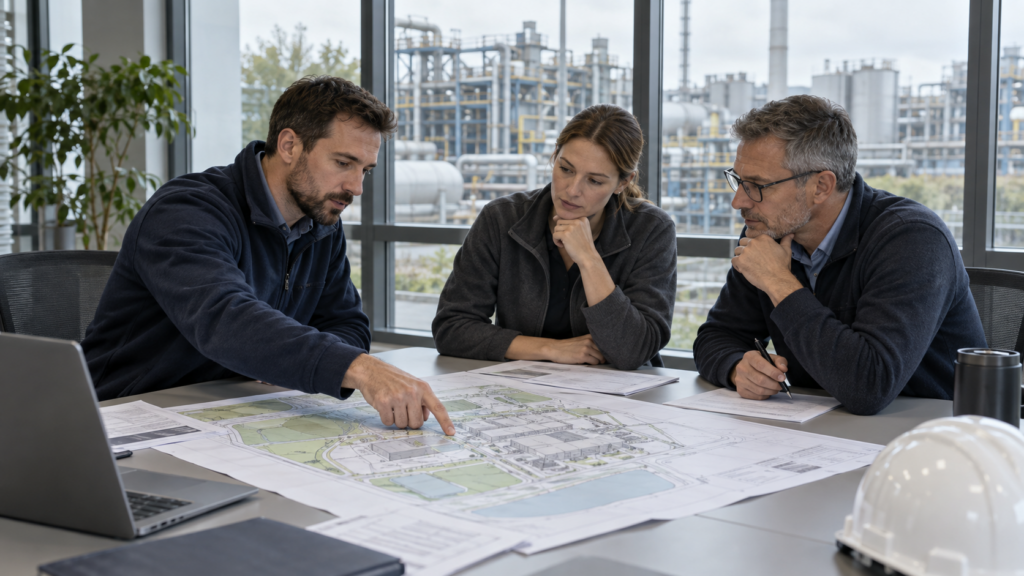
Through framework agreements, we provide ongoing environmental support to large industrial sites, including an oil refinery and a chemical plant. Our work ranges from early risk assessment and technical analysis to recommendations and support in meetings with environmental authorities and other contractors.
This overview describes how we provide ongoing environmental support under framework agreements. Client identities and project details remain confidential.
The brief
Environmental questions arise throughout the operation and development of a large industrial site. Some concern an early proposal; others require a detailed assessment, a recommendation or discussion with an environmental authority or another contractor. Several matters may progress in parallel, with different information needs and decisions ahead.
The purpose of ongoing support is to connect these questions with the site’s existing knowledge and provide technical input at the stage where it is needed. The focus is the environmental issue to be resolved and the evidence needed to inform the next step.
Establishing the context
Each matter begins with an understanding of the site’s question and the information available. Relevant documentation, previous analyses and earlier findings help establish what is already known, which assumptions remain applicable and where further assessment may be necessary.
We consider the issue in this context and identify the scope of analysis needed. The depth of the work follows the question: an initial assessment may define the next investigation, while a more developed matter may require conclusions and guidance for a decision.
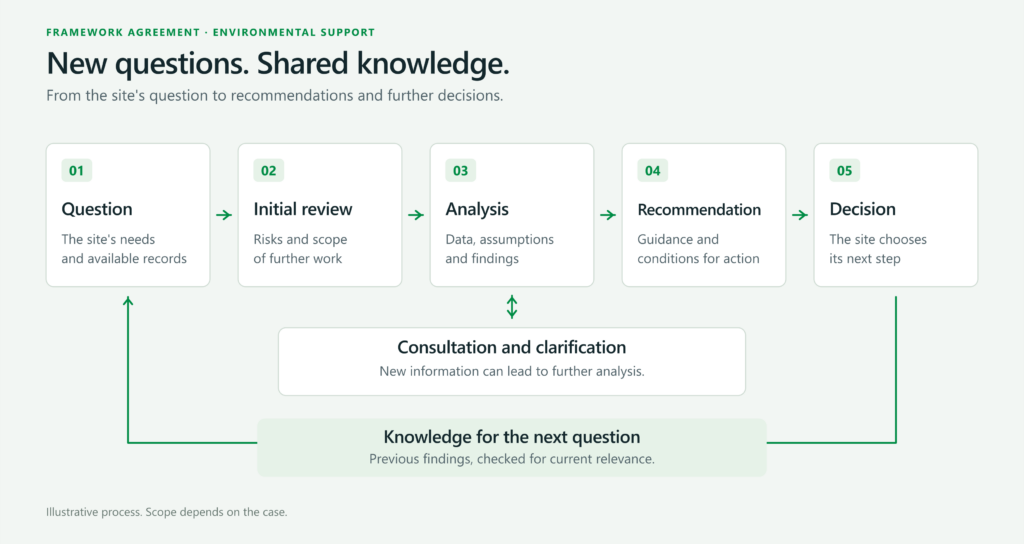
Illustrative diagram From the site’s question to a recommendation and the next decision. Illustrative process; scope and sequence depend on the matter.
How the support works
The site brings its operational knowledge, defines its needs and makes decisions within its responsibilities. We contribute environmental analysis, technical guidance and recommendations. Other contractors contribute information and proposed solutions within their own assignments.
Support can also include participation in meetings with environmental authorities and contractors. We explain the technical basis of our work, discuss findings and help clarify questions requiring further attention. These discussions can lead back to the analysis as new information becomes available.
The scope develops around the needs of the matter, connecting preliminary assessment, detailed work and the explanation of conclusions.
Three types of environmental question
What needs to be understood before work proceeds? An early question calls for a review of the available information, potential environmental risks and gaps in understanding. The output helps define which issues need closer examination and what further analysis would be useful.
What does the evidence mean for the site’s decision? A more developed matter calls for an assessment of the materials and the environmental questions they raise. We turn the findings into guidance and recommendations, explaining their basis and any conditions relevant to their use.
What needs to be clarified with other participants? Meetings provide an opportunity to explain analyses, discuss recommendations and identify outstanding technical questions. We contribute to that discussion alongside the site, authorities and contractors. These three types describe the support model; they may occur within one matter or across separate assignments.
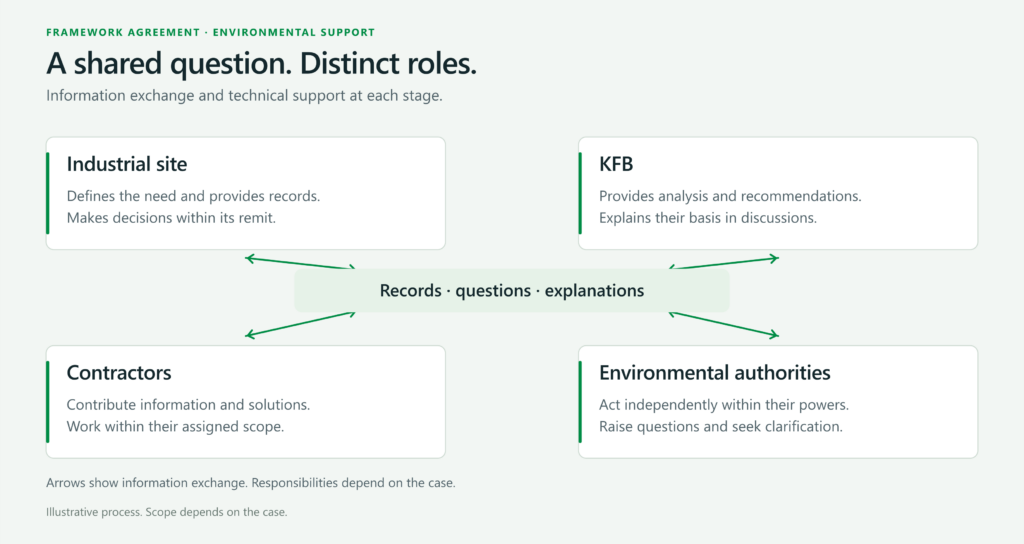
Illustrative diagram Information exchange between the site, KFB, contractors and environmental authorities. The diagram shows communication, not a reporting hierarchy.
What the site receives
The outputs are preliminary and final analyses, guidance, recommendations and technical input to discussions. Together, they provide a basis for the site to consider its options and determine subsequent work.
The organisational value lies in continuity across these stages: a question can be assessed, developed and discussed with reference to the same context. The basis of a recommendation can be explained, revisited as new information arrives and used as the matter progresses.
Carrying knowledge forward
An ongoing relationship makes earlier work available as context for new questions. Its relevance must be checked as the site and the matter evolve: previous assumptions may need revisiting, and new information may change the assessment.
This continuity connects the next analysis with what has already been learned, while keeping the recommendation tied to the circumstances of the current decision.