From an environmental signal to an informed decision with RAFA

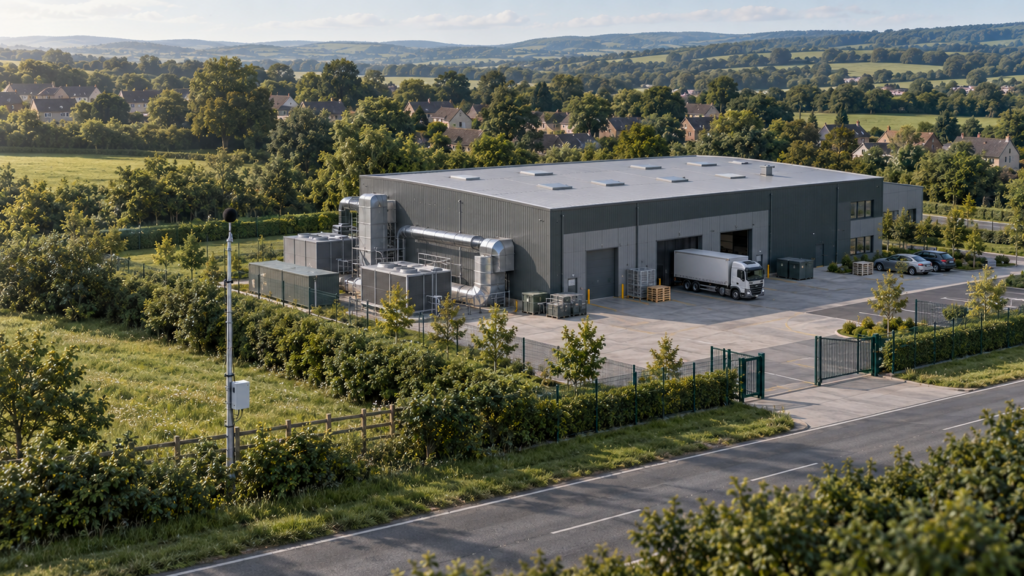
In this illustrative industrial-site scenario, a periodic change in noise prompts an investigation. RAFA supports access to data and action planning. The site team and KFB specialists connect observations with operational knowledge, investigate possible causes and define how to check the response.
Illustrative application scenario. Not a record of a specific deployment or its results.
The brief: explain a recurring change
The environmental coordinator notices a periodic change in recorded noise levels. It raises a practical question: what could explain the pattern, and what should the team investigate first?
The coordinator and a KFB specialist define the period and area to examine. They consider where the change is observed, which installations could contribute and what information is available. RAFA provides access to monitoring information and historical data for this initial review. The team uses these observations to frame a manageable investigation, with a clear question to answer before choosing an intervention.
The baseline: give the data a site context
The specialist reviews the available noise data, checking coverage and identifying gaps that could affect interpretation. Historical observations provide a reference for understanding how the site’s acoustic conditions vary.
RAFA’s database and maps help organise information about the site and the locations relevant to the assessment. The team also draws on earlier reports and information supplied by technical staff: which equipment was running, whether the operating mode changed and whether maintenance or unusual activity occurred.
Together, these sources establish what is known about the event and where further evidence is needed. Operational knowledge becomes part of the analysis through the people who understand the installation.
The analysis: turn an overlap into a testable question
The decisive comparison brings the noise observations together with information about operating modes. Technical staff explain that one mode brings an additional extraction unit into use. The specialist compares periods when this mode is active with the periods of changed noise.
An overlap provides a focused hypothesis: could the extraction unit, or another activity associated with that operating mode, explain the observations? The specialist considers other sources and conditions before recommending a targeted check.
RAFA supports the review of the event and its historical context. The interpretation comes from the specialist, informed by the site team. A technical inspection and, where needed, a dedicated measurement can then test the hypothesis. The comparison has made the next investigative step specific; establishing the cause still requires evidence.
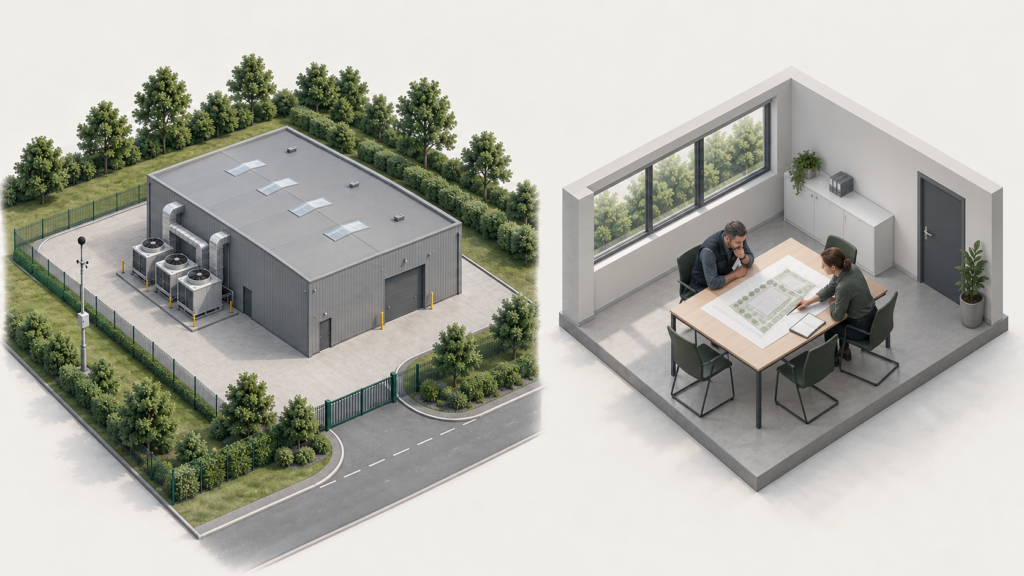
CONCEPTUAL ILLUSTRATION Observations need to be considered alongside operational knowledge and specialist assessment. AI-generated conceptual illustration; no RAFA interface or evidence from a real investigation is depicted.
The decision: define a practical next step
The first decision is to inspect the extraction unit and examine its operation during the mode under review. The technical team checks the equipment and reports its findings to the environmental coordinator and specialist.
Those findings determine whether the next step should involve maintenance, an operational adjustment, an acoustic measure or further investigation. The responsible site manager considers feasibility and approves the response.
RAFA’s action-planning and progress-tracking capabilities can support this stage. The team records the reasoning in its project documentation and agrees who will carry out the work. It also defines what evidence will be needed to assess the response, so verification is considered when the action is chosen.
The verification: check the response in context
After the agreed action, the specialist reviews subsequent observations alongside the earlier data available through RAFA. The comparison takes account of operating modes, measurement locations, relevant environmental conditions and data quality.
This review asks whether the evidence addresses the original question and whether further investigation is necessary. A quieter observation on its own may be insufficient if the equipment was operating differently. The specialist explains what can be concluded and identifies any remaining uncertainty.
Where formal compliance assessment is required, it follows the applicable criteria and measurement approach. A system notification or a configured threshold has a separate role in drawing attention to an event.
The prevention: carry the learning forward
The team turns the investigation into guidance for future reviews: which operating modes deserve attention, what information technical staff should provide and when to repeat an assessment. The findings can inform maintenance planning and the site’s wider noise management plan.
RAFA supports continuity through access to data, expert knowledge resources and action planning. KFB specialists help the team interpret new observations as the installation and its operation evolve.
The value of this approach is a connected working process. An observation leads to a defined question, the evidence directs an investigation, and the chosen response includes a way to check it. What the team learns then shapes the next cycle of monitoring and prevention.
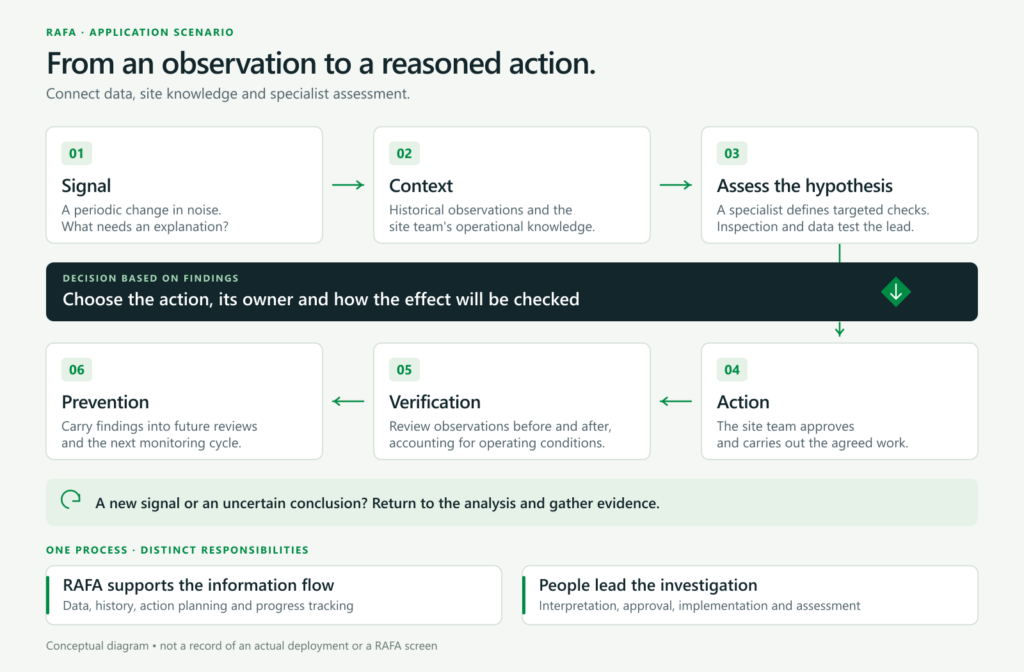
PROCESS DIAGRAM An illustrative route from observation to action and further review. The diagram distinguishes data and planning support from interpretation, decisions and team activities; it contains no data or sequence from a real deployment.
Call to action
Have a recurring environmental issue that needs a clearer explanation? Talk to KFB about bringing monitoring data, operational knowledge and specialist assessment together with RAFA to define the next step.